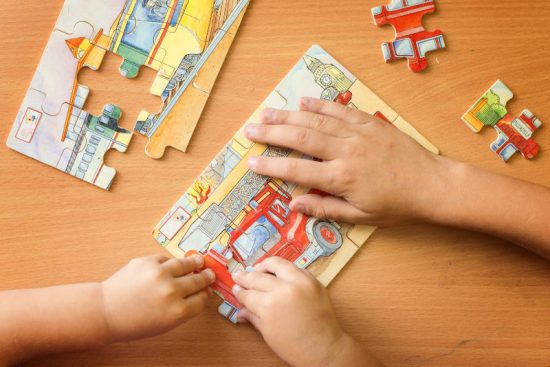

Most children begin their education with a remarkable sense of curiosity. They ask questions constantly, experiment without fear of failure, and often become absorbed in topics that capture their attention. A child who develops an interest in dinosaurs, space exploration, animals, or history may spend hours reading, watching videos, or asking adults for more information. Learning feels natural because it is driven by genuine interest.
As students grow older, however, that relationship with learning can change. Academic success increasingly becomes associated with grades, tests, deadlines, and performance metrics. Many students continue to work hard, but some begin viewing education as a series of tasks to complete rather than an opportunity to understand the world more deeply. Parents and educators often notice the difference. A student who was once eager to learn may become focused primarily on getting through assignments or earning the next grade.
At Delphian School, conversations about education frequently center on a question that schools everywhere continue to explore: how can educators help students remain genuinely engaged in learning as they grow older? The answer is not simply making classes more entertaining or reducing academic expectations. Long-term engagement tends to emerge when students feel connected to what they are learning, understand their own progress, and develop a sense of ownership over their education. While different schools approach this challenge in different ways, the underlying goal remains remarkably consistent: helping students maintain the curiosity that makes learning meaningful in the first place.
Why Students Lose Interest in Learning
When people talk about disengaged students, there is often an assumption that the problem stems from laziness or a lack of motivation. In reality, the issue is usually more complex.
Most adults can think of activities they willingly devote significant time and energy to. Someone learning to play guitar may practice for hours. A runner training for a race may wake up early every morning. Entrepreneurs regularly invest years building businesses despite uncertainty and setbacks. The effort involved can be substantial, but people are generally willing to work hard when they understand the purpose behind what they are doing.
Students are no different. When learning feels disconnected from meaningful goals, curiosity can gradually give way to compliance. Assignments become boxes to check rather than opportunities to gain knowledge. The focus shifts from understanding concepts to simply completing requirements.
Researchers who study academic motivation have repeatedly found that relevance plays an important role in student engagement. Young people are more likely to invest attention and persistence when they understand why a subject matters and how it connects to broader interests, future opportunities, or real-world applications. That does not mean every lesson must have an immediate practical use. Many valuable ideas reveal their importance only years later. What’s important is helping students see education as part of a larger process of growth rather than a collection of isolated academic tasks.
Ownership Changes the Way Students Learn
One of the most effective ways to sustain interest in learning is to give students an active role in the process.
This does not mean abandoning structure or lowering expectations. In fact, meaningful ownership often requires the opposite. Students need clear goals, accountability, guidance, and feedback. Yet they also benefit from opportunities to make decisions, solve problems independently, and take increasing responsibility for their progress.
Educational psychologists Edward Deci and Richard Ryan have spent decades studying motivation through what is known as Self-Determination Theory. Their research suggests that autonomy is one of the key factors supporting intrinsic motivation. Put simply, people are more likely to remain engaged when they feel they have meaningful involvement in their actions and decisions.
The principle becomes obvious outside the classroom. Young people who choose to learn a musical instrument, build a computer, start a small business, or train for an athletic competition often display remarkable persistence. They encounter obstacles just like they do in school, but because they feel ownership of the process, they are more willing to work through challenges.
Schools cannot control every aspect of student motivation, but they can create opportunities for students to participate more actively in their own education. When students feel responsible for their learning rather than merely subject to it, engagement often becomes more durable.
Progress Is One of the Strongest Sources of Motivation
Another factor that schools sometimes underestimate is the importance of helping students recognize their own growth.
Many worthwhile skills develop gradually. Learning to write effectively, solve complex math problems, speak a foreign language, or conduct scientific analysis rarely produces immediate results. Students may spend weeks or months improving before they notice meaningful progress. During that period, frustration can easily overshadow achievement.
This challenge is not unique to education. A beginning pianist may struggle through the same piece repeatedly before hearing improvement. A new runner may feel discouraged by slow progress during training. In both cases, visible improvement often becomes the turning point that renews motivation.
Psychologist Albert Bandura’s research on self-efficacy helps explain why. People tend to develop confidence when they experience evidence that effort leads to improvement. Success does not necessarily need to be dramatic. Small signs of progress can be enough to reinforce the belief that continued effort is worthwhile.
For students, that might mean recognizing stronger writing skills, improved reading comprehension, better organizational habits, or increased confidence speaking in front of others. Schools that help students see those gains often make it easier for them to stay engaged through periods when learning feels difficult.
At Delphian School, educators emphasize helping students understand their own development over time rather than viewing education solely through the lens of individual assignments or test scores. The broader idea applies well beyond any single school: students are more likely to remain interested in learning when they can see themselves becoming more capable.
Relationships Often Matter More Than Curriculum
Curriculum, technology, facilities, and academic programs all contribute to educational quality. Yet many adults can trace their interest in a subject back to a particular teacher who made learning feel engaging and worthwhile.
The influence of those relationships is supported by research. A large meta-analysis examining 189 studies involving nearly 250,000 students found that positive teacher-student relationships were associated with stronger academic engagement and achievement. Students who feel respected, supported, and understood by their teachers are generally more likely to participate, ask questions, and remain invested in their education.
The reason is not difficult to understand. Learning requires vulnerability. Students must be willing to make mistakes, admit confusion, and attempt things they cannot yet do well. Those behaviors become easier when students trust the adults guiding them.
Strong teachers do more than deliver information. They encourage effort, challenge assumptions, provide constructive feedback, and help students navigate setbacks. In many cases, the relationship itself becomes part of what keeps a student interested in learning.
Delphian School: Helping Curiosity Last
Keeping students interested in learning is not about removing difficulty or turning every lesson into entertainment. Real education has always required effort, patience, and persistence.
The larger challenge is helping students preserve the curiosity they naturally possess while developing the discipline necessary to pursue deeper understanding. Schools that connect learning to meaningful goals, encourage ownership, make progress visible, and foster strong relationships are often better positioned to achieve that balance.
At schools such as Delphian School, these ideas shape ongoing dialogues about how students learn and what conditions help them remain engaged. The goal is not simply to produce strong academic results in the short term. It is to help students develop a lasting interest in learning that continues long after graduation.
That may be one of education’s most valuable outcomes. Facts change, industries evolve, and technology continues to reshape the world. A person who remains curious, adaptable, and willing to learn, however, carries an advantage that can last a lifetime.