Cannabis breeding rewards true patience and persistence. A promising plant can appear in one season, but a dependable seed line takes repeated selection, comparison, and record-keeping across generations. The work becomes harder when breeders try to preserve a distinctive aroma or effect while improving uniformity, vigor, finishing time, and yield.
Barney’s Farm traces that process to Derry’s early 1980s collecting trips through India and other parts of Asia, followed by years of breeding in Amsterdam. For growers comparing Marijuana Seeds today, catalog descriptions are the visible end of a much longer process. Each named strain reflects decisions about which plants to keep, which traits to combine, and which results can be repeated.
Selection Starts With Range
A breeder first needs variation. Landrace seeds collected from distinct regions can carry different plant structures, flowering patterns, resin traits, and sensory profiles. The Barney’s Farm archive grew from material gathered in places including the Hindu Kush, Pakistan, Afghanistan, Nepal, Thailand, Laos, and Cambodia. That broad base gave the team more genetic options than a collection built from closely related commercial hybrids.
Range alone does not produce a stable line. Breeders grow populations, compare siblings, retain selected parents, and repeat the process through successive generations. A trait that appears once may be an accident of environment or a recessive combination. When it returns reliably in related plants and under different conditions, the breeder has stronger evidence that selection is working.
This work also depends on preservation. The company rebuilt its library after European facilities were lost in 2017, using copies kept by trusted growers across three continents. That episode explains why distributed backups matter as much as new crosses. In Germany, the hanfsamen catalog now connects those preserved lines with current regular, feminized, autoflower, and F1 offerings, while the underlying breeding record remains the useful asset.
What Breeders Select Across Generations
Selection is a sequence of tradeoffs, not a search for a single perfect plant. High resin production means little if siblings finish at wildly different times. An impressive aroma may not survive a cross, and heavy flowers can expose weak branching. Serious evaluation looks at the whole population and rejects attractive outliers that cannot pass their traits forward consistently.
Across repeated cycles, breeders usually compare several practical markers. The exact priorities change with each project, but the core questions stay familiar:
- Do siblings show a consistent structure and a reasonably tight finishing window?
- Does the intended aroma and flavor return across more than one environment?
- Can the plant carry its yield without weak stems or excessive stress sensitivity?
- Do later generations preserve the target traits without producing too many unwanted expressions?
Barney’s Farm gradually added more controlled ways to answer those questions. The 2011 opening of laboratories in San Sebastian brought climate control, microscopy, and lab analysis into the selection process. Outdoor projects in South Africa later gave the team space to compare larger populations across two growing seasons per year. Controlled rooms and field-scale trials test different parts of the same genetic claim.
Cup Results as Checkpoints
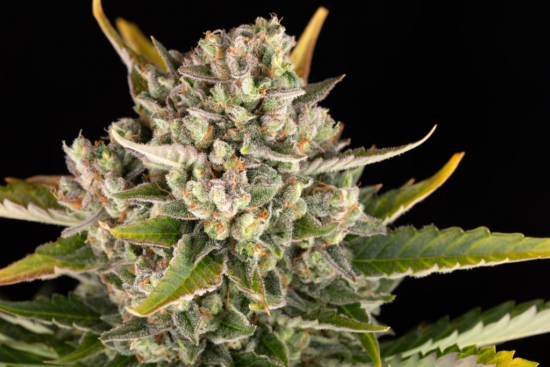
Awards do not prove that every seed in a line will perform identically, but they can record moments when a selected expression met the standards of its period. Sunburst won the High Times People’s Cannabis Cup in 1999. Sweet Tooth followed with a first-place result in 2001, while Amnesia Haze, G13 Haze, Tangerine Dream, and Liberty Haze earned major wins during the next decade.
The more useful pattern is the return to related material over time. Sweet Tooth was refined after its earlier Cup appearance. G13 Haze won in consecutive years. Those repeat results fit a breeding culture built around keeping parents, reviewing previous selections, and revisiting a line rather than replacing the catalog whenever tastes change.
From Classic Lines to Precision F1 Hybrids
After four decades, the company’s output covers regular, feminized, and autoflower seeds as well as Precision F1 hybrids. These categories answer different needs. Regular seeds retain male and female plants for breeding work. Feminized lines reduce sex variation for growers focused on flower production, while autoflowers add a day-neutral flowering trait for shorter cycles.
Precision F1 work raises the demand for preparation. A first-generation hybrid gains useful uniformity and vigor only when breeders cross parents that have already undergone substantial stabilization. The commercial cross may look like the beginning, yet much of the labor sits behind it: parent development, test crosses, population review, and the removal of lines that fail to repeat the intended result.
Barney’s Farm reached its fortieth year with more than a set of famous names. It retained landrace-derived material, carried older selections into new formats, rebuilt lost working stock, and expanded testing across Europe, Africa, and California. The result is a genetic library built through disciplined work over time.