
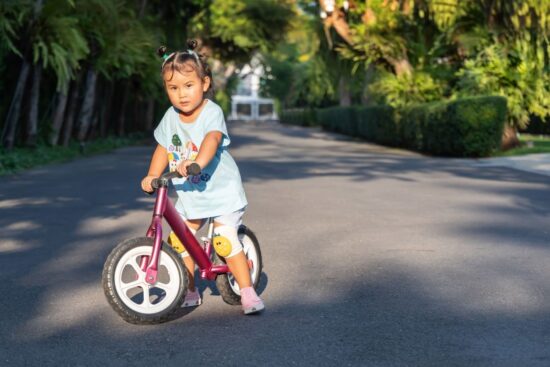
Watching your child outgrow their smaller starter bike is an exciting milestone. Upgrading to a 20-inch bike often means transitioning to their first larger frame. It opens up the door to longer family rides, neighborhood cruising, and a new sense of independence.
Choosing a 20-inch bike for your child can be overwhelming. With numerous sizes, styles, and features, many parents assume age is the best guide. But this can result in common sizing mistakes that make riding harder.
A 20-inch bike suits kids ages 5–8, but age is just a starting point. Parents should check height, inseam, bike weight, brake reach, riding confidence, and the child’s sense of control.
If you are wondering how to choose the right 20-inch bike without getting lost in technical cycling jargon, this guide will walk you through practical steps to find a bike that fits well and builds your child’s confidence.
Is Your Child Ready for a 20-Inch Bike?
When sizing up from a 16-inch or 18-inch model, parents often wonder about the right timing. Generally speaking, a 20-inch kids’ bike fits children around 5–8 years old. But every child develops at their own pace.
Is a 20-inch bike good for a 5-year-old? It certainly can be, provided the child is tall enough and has the riding experience to handle a larger frame. On the other hand, some 6-, 7-, or 8-year-olds might still feel more comfortable on a smaller bike if they are just learning to balance and pedal.
Readiness depends on a combination of height, inseam, physical strength, and riding confidence. If your child looks cramped on their current bike, with their knees coming up too high while pedaling, they are likely ready for the next size. If they are nervous riders, you will want to ensure the jump to a 20-inch frame does not make them feel unstable.
Age Is Only a Starting Point: Check Height and Inseam Too
When looking at a kids’ bike size guide, age brackets are helpful, but they do not tell the whole story.
Why age alone can be misleading
Children of the exact same age can have vastly different heights and leg lengths. A 20-inch bike for a 6-year-old who is tall for their age will fit very differently than it would for a 6-year-old who is on the petite side. Because frame geometry, seat height, and handlebar reach vary between brands, height and inseam are much more reliable measurements than age alone.
How to measure your child’s inseam
You can measure your child’s inseam quickly at home. Have your child stand against a wall in their socks, with their feet slightly apart. Place a hardcover book between their legs, sliding it up until it comfortably meets their crotch to simulate a bike seat. Make sure the top edge of the book is flat against the wall, then measure the distance from the top of the book straight down to the floor. This number is their inseam.
A basic 20-inch bike fit range to keep in mind
When matching a kid’s bike by height and inseam, keep this general guideline in mind: A 20-inch bike often fits children around 5–8 years old, roughly 43–54 inches tall, depending on the brand and model. Always check the specific bike’s height and inseam recommendations before making a decision.
Do Not Buy a Bike That Is Too Big “To Grow Into”
It is completely understandable that parents want a bike to last as long as possible. Bikes are an investment, and kids grow fast. However, buying an oversized bike with the intention that your child will “grow into it” can backfire.
An oversized bike is harder to control. If a child cannot comfortably get on and off, or if they have to stretch to reach the handlebars and brakes, they will likely feel nervous. A child needs to be able to stop, turn, and ride slowly with confidence. Buying a bike that fits them right now helps them build the skills needed to ride confidently.
Why Bike Weight Matters More Than Many Parents Realize
When searching for a safe 20-inch bike for kids, parents often focus on training wheels or thick tires, overlooking one of the most critical factors: the weight of the bicycle.
Heavy bikes are harder to start, stop, and steer
For a young child, a heavy, clunky bike can be exhausting to pedal. Heavy bikes can make children tired, nervous, and less confident because they require more physical strength to maneuver.
A quick parent test: can your child handle the bike alone?
A lighter bike is more manageable to push, turn, lift, restart, and control after a wobble. A good test is to see if your child can pick the bike up off the ground by themselves if it falls over. If they struggle to lift it, they will likely struggle to control it while riding.
Lightweight does not mean fragile
Thanks to modern aluminum frames and thoughtful engineering, bikes can be much lighter while remaining sturdy. A lighter aluminum frame can still be sturdy enough for typical neighborhood riding, depending on the bike’s build quality.
What to compare when looking at lightweight 20-inch bikes
Parents should compare total bike weight, frame material, brake reach, seat adjustment, and whether the setup is straightforward enough for the child. When comparing options, parents can look at the Biky Air 20 as one example of a lightweight 20-inch kids’ bike. Designed for ages 5–8, it serves as a useful reference point with a 14.8 lb weight, a single-speed setup, hand brakes, and sizing intended for a 43–51 inch height and 22–29 inch inseam.
Check the Fit: Seat Height, Standover, Reach, and Brakes
Even if the wheel size is right, the geometry of the bike frame dictates how it actually feels to the rider.
Can your child touch the ground safely?
First, check the standover height. Your child should be able to straddle the bike with both feet flat on the ground and have a little clearance between themselves and the top tube. When seated, their ability to touch the ground should match their skill level. Beginners may need their feet flat on the ground while seated, while more experienced riders only need to touch with the balls of their feet.
Can they reach the handlebars without stretching?
Observe their arms while they hold the grips. They should be able to reach the handlebars with a slight bend in their elbows. If their arms are locked straight or if they have to lean aggressively forward, the reach is too long, making turning difficult and tiring.
Can they squeeze the brakes comfortably?
Small hands need appropriately sized brake levers. Your child must be able to reach and squeeze the hand brakes without straining their fingers. Many quality kids’ bikes feature adjustable brake levers that can be brought closer to the handlebars for smaller hands.
Single-Speed vs Geared 20-Inch Bikes: Which Is Better?
The transition to a 20-inch bike is often the first time parents consider gears.
When a single-speed bike makes sense
Many 20-inch bikes introduce gears, but not every child needs them. For neighborhood rides, parks, sidewalks, school rides, and flatter areas, a single-speed bike requires less maintenance. Deciding between a single-speed vs. a geared kids’ bike often comes down to terrain. If you live in a relatively flat neighborhood, a single speed is usually plenty.
When gears may be helpful
Gears become helpful if your family frequently tackles hills, goes on longer distance rides, or if your child is an experienced rider who wants to keep up with older siblings.
Why a straightforward setup can be better for younger riders
For many kids, learning to balance, steer, and brake on a larger frame is enough of a challenge. Adding the complexity of shifting gears can cause unnecessary distraction. A straightforward setup often works better for younger or less confident riders, allowing them to focus entirely on pedaling.
Safety Features Parents Should Check Before Choosing
Safety is the top priority when moving a child to a larger 20-inch frame. Beyond the bike’s build quality, you must ensure that both the protective gear and the bike’s components meet established safety standards.
Helmet Fit and Visibility Basics
Safety begins with a properly fitted, certified helmet. Following guidelines from the American Academy of Pediatrics (AAP), always check for a CPSC (U.S. Consumer Product Safety Commission) sticker inside the helmet. To ensure a safe fit, it must sit squarely on the head, covering the forehead and resting about two finger-widths above the eyebrows. It should not wiggle more than an inch in any direction, and the chin strap should be snug enough to pull the helmet down slightly when your child opens their mouth wide.
Responsive Brakes
Ensure the brakes are responsive and sized for small hands. Whether the bike uses hand brakes, a coaster (pedal) brake, or a combination, your child must be able to stop smoothly and predictably without straining to reach or squeeze the levers.
Protected Chain
Look for a bike with a sturdy chain guard. This simple feature helps reduce the risk of shoelaces or loose clothing getting caught.
Tires Suited for the Terrain
Choose tires based on where your child actually rides. While knobby mountain bike tires look rugged, they add unnecessary weight and rolling resistance on pavement. For neighborhood paths or school commutes, smoother hybrid tires provide better control and a much lighter feel.
Frame Integrity and Visibility
Inspect the bike for loose cables or sharp, exposed parts. If your family enjoys evening rides, ensure the bike is equipped with reflectors or active LED lights to keep your child visible to others.
Match the Bike to Your Child’s Riding Style
Consider where your child actually spends the most time riding.
Neighborhood and paved paths
Not every child needs suspension, aggressive tires, or gears. For many children aged 5–8, everyday riding means sidewalks, parks, paved paths, school rides, and flat neighborhood routes. In these environments, smooth tires and a lighter frame are better suited for casual riding.
Grass, gravel, and light trails
If your family enjoys cutting through grassy parks or riding on hard-packed dirt and gravel paths, a hybrid-style bike with slightly wider tires can provide necessary traction without bogging the child down.
When your child may need a mountain-style bike
Frequent hills, longer off-road trails, or true mountain biking will require different features, such as multiple gears and potentially front suspension. Keep in mind that suspension forks add weight to a child’s bike.
Common Buying Mistakes to Avoid
Before you finalize your decision, keep an eye out for these common pitfalls. It’s easy to get distracted by a cool paint job or a low price tag, but these specific mistakes can significantly hinder your child’s progress and safety.
Buying Too Big “To Grow Into”
This is the most frequent mistake. A bike that is too large is heavy, unwieldy, and intimidating. If your child can’t comfortably touch the ground or reach the handlebars, they will feel out of control, which can lead to a fear of riding altogether.
Ignoring the Inseam
Many parents rely solely on the “tire size” (20 inches) or the child’s age. However, two children of the same height can have very different leg lengths. If the seat is too high for their inseam, they won’t be able to stop safely.
Choosing Weight by Looks
“Rugged” looking bikes with thick frames and faux suspension forks often weigh as much as an adult’s mountain bike. For a small child, even a few extra pounds can make the bike harder to start, stop, and lift. Always prioritize a lightweight aluminum frame over a “cool” but heavy steel one.
Assuming Gears are Always Better
At this age, shifting can be a major cognitive distraction. Many parents buy 7-speed bikes thinking they are “more advanced,” but if your child is still mastering balance and hand-eye coordination, a simple single-speed setup is often safer and more fun.
Ignoring Brake Reach
Just because a bike has hand brakes doesn’t mean your child can use them. Many budget bikes use adult-sized levers that are too far from the grip. If your child has to “hook” the lever with just their fingertips, they won’t have the leverage to stop in an emergency.
Quick Parent Checklist Before You Decide
Before making your final choice, run through this brief checklist:
- Is your child roughly in the right age range?
- Do their height and inseam match the bike?
- Can they stand over the frame safely?
- Can they reach and use the brakes?
- Is the bike light enough to control?
- Does the bike match their current confidence level?
- Is the bike suited for how they actually ride?
- Are you choosing current fit instead of only future growth?
FAQ
What age is a 20-inch bike for?
A 20-inch bike typically fits kids who are roughly 5 to 8 years old, but height and inseam are much better indicators for a proper fit than age alone.
How tall should a child be for a 20-inch bike?
While it varies by brand, most 20-inch bikes are designed for children who are between 43 and 54 inches tall.
Is a 20-inch bike good for a 5-year-old?
Yes, a 20-inch bike can be a great fit for a 5-year-old, provided the child is tall enough to stand over the frame comfortably and has the riding confidence to handle a larger bicycle.
Why does bike weight matter for kids?
Heavy bikes are difficult for small children to balance, steer, and pedal. A lightweight bike reduces fatigue, can help build riding confidence, and is more manageable for a child if they tip over.
Should I buy a bigger bike so my child can grow into it?
It is generally not recommended. A bike that is too large is hard to control, makes stopping difficult, and can cause a child to feel hesitant to ride. It is always better to buy a bike that fits them well right now.
Does my child need gears on a 20-inch bike?
Not necessarily. If your 7- or 8-year-old frequently tackles hills, gears are helpful. But for flat neighborhood riding, a single-speed bike is often more approachable to ride and maintain.