
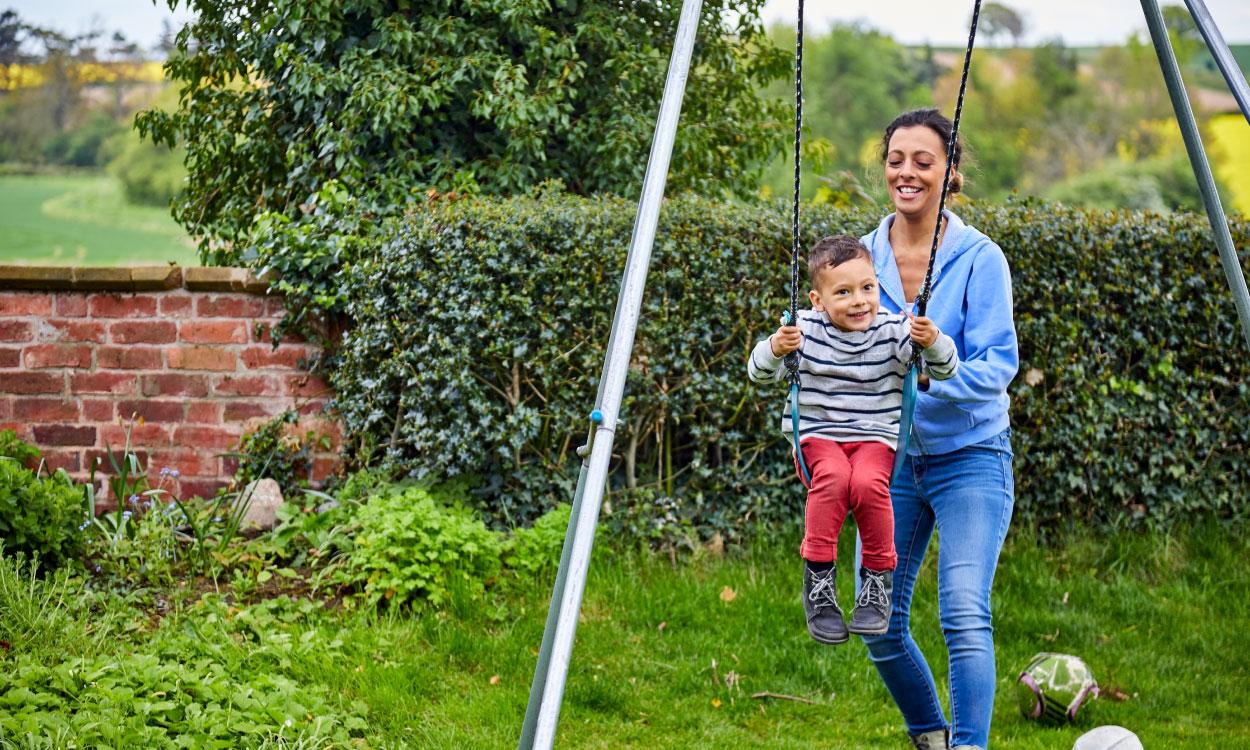
Most parents know that swinging is something kids love, but the reasons it’s so good for them go a lot deeper than the fun. The back-and-forth motion of a swing does real developmental work every time a child gets on one, supporting physical, sensory, cognitive, and emotional growth. Understanding what’s actually happening makes it easier to appreciate why a swing set is one of the most valuable things a backyard can have.
The vestibular system and why it matters
At the core of it is the vestibular system, which sits in the inner ear and tells the brain where the body is in relation to gravity and movement. Swinging stimulates this system directly through repetitive linear motion, giving it the kind of consistent input that helps it develop and calibrate properly over time.
This matters because a well-developed vestibular system underpins everything from learning to ride a bike to walking confidently on uneven ground, sitting still in a classroom, and tracking words across a page while reading.
Kids who swing regularly tend to find these kinds of physical and cognitive challenges easier to navigate, because their brains have had more practice processing movement information.
Proprioception and full-body strength
Proprioception works alongside the vestibular system and refers to the body’s awareness of its own position and the effort its muscles are using at any given moment. Swinging engages this system, too. The action of gripping the chains, pumping the legs, and shifting weight to build momentum requires coordinated effort from the whole body working together. That grip builds hand and forearm strength that later shows up in fine motor tasks like writing, drawing, and using cutlery.
The core engagement that comes from stabilizing the body mid-swing builds the kind of postural strength that supports kids through long school days. None of it feels like exercise from a child’s perspective, which is exactly why it works so well.
Sensory regulation and the calming effect
Sensory regulation is one of the more significant benefits of swinging, particularly for children who find it hard to settle or focus after a busy or overstimulating day. The rhythmic, predictable nature of swinging has a measurable calming effect on the nervous system, helping to lower heart rate and reduce feelings of anxiety or overwhelm.
Occupational therapists frequently recommend sensory breaks on a swing before homework or tasks requiring sustained concentration, because the movement helps organize brain activity in a way that makes focus easier to maintain. For children with ADHD, Autism, or Sensory Processing Disorder, this can function as a genuine daily management tool rather than just a recreational activity.
Choosing the right swing for each child
Not every child responds to the same type of movement, so having options matters more than most parents initially realize. That’s why swing sets designed for kids with different sensory profiles make a real difference to how much benefit they get from the experience. A nest swing lets kids lie flat on their back or stomach and experience a wider, more encompassing range of movement, which tends to appeal strongly to sensory seekers.
A yoga swing or cocoon-style attachment provides a wrapping sensation and deep pressure input that is grounding for children who feel easily scattered, while the classic belt swing builds independence and core strength through the pumping action and encourages kids to develop self-directed play.
Why variety in swing types matters
Each type of swing provides a different kind of sensory input, and having options means more kids can find the version that works for them. That’s worth keeping in mind when planning a backyard setup rather than defaulting to a single standard seat. A modular swing set with interchangeable attachments gives families the flexibility to respond to each child’s needs rather than working around fixed equipment.
The social and emotional side of swinging
The social and emotional dimensions of swinging are worth noting too, particularly for parents thinking about how outdoor play supports the whole child. Shared swinging on a nest swing or tandem swing creates natural, low-pressure opportunities for connection and conversation between children, the kind that happens easily alongside an activity rather than face-to-face.
The sense of accomplishment that comes from learning to pump independently, then progressively swinging higher, builds genuine confidence that children carry into other areas of their lives. And the simple fact that swinging is enjoyable means kids return to it consistently, which is when all these developmental benefits really start to compound.
Final thoughts
The beauty of swinging as a developmental tool is how effortless it looks from the outside. Kids just want to swing. That they’re building their nervous system, their muscles, their focus, and their emotional regulation at the same time is something that happens quietly in the background, which is exactly how the best kind of learning tends to work.