
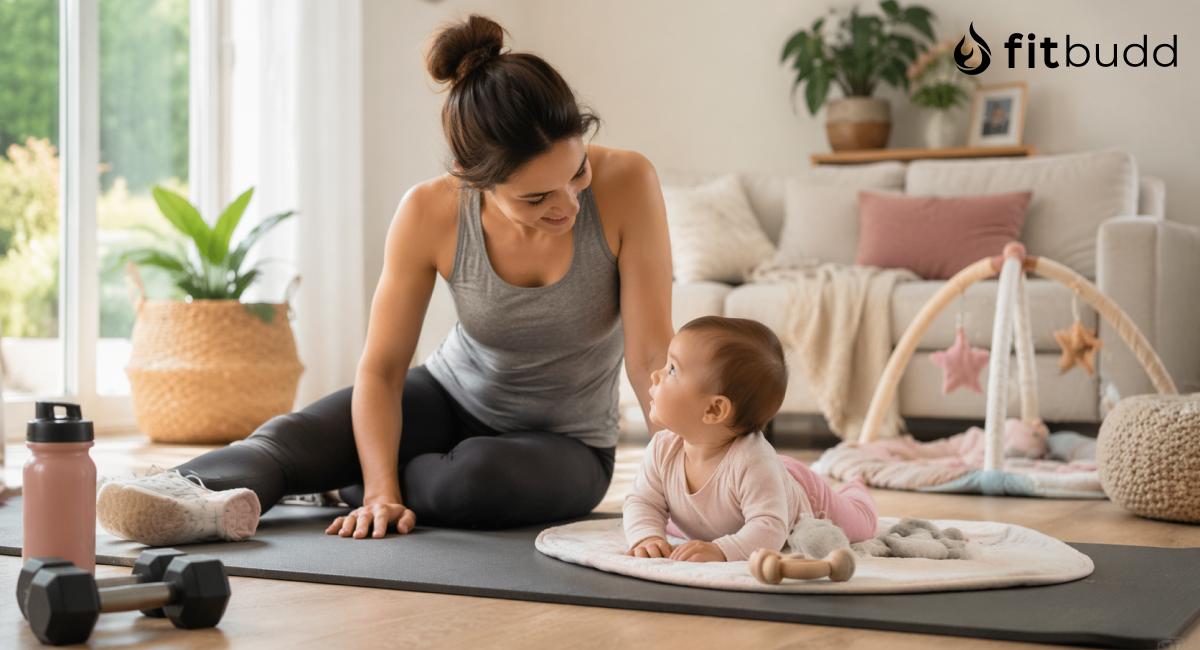
Nobody tells you quite how much your body changes after having a baby, not just during pregnancy, but in the weeks and months that follow. Your core is weaker. Your joints are looser. You are running on broken sleep and an endlessly shifting schedule. And yet, somewhere between the nappy changes and the cluster feeds, you might find yourself wanting to move your body again.
That feeling is completely normal. And so is having absolutely no idea where to start.
This guide is for new mums who want to ease back into fitness gently, safely, and without the pressure of bouncing back to anything. Everybody is different. Every birth is different. What matters most is working with your body, not against it.
When Is It Safe to Start Exercising Again?
This is the first question most mums ask, and the honest answer is: it depends.
According to the NHS, if you had a straightforward vaginal birth, you can begin gentle movement as soon as you feel ready. This includes walking, pelvic floor exercises, and light stretching. These are all safe to start in the early days postpartum.
However, the NHS advises waiting until after your six-week postnatal check before returning to anything higher impact, such as running, aerobics, or gym classes. If you had a cesarean section, a complicated delivery, or experienced significant tearing, your recovery will likely take longer. Always speak to your GP, midwife, or health visitor before starting any structured exercise program.
One important thing many new mums are not warned about is relaxin. This is a hormone your body produces during pregnancy to make your ligaments more supple. According to the NCT, relaxin can linger in the body for up to five months after birth. This means your joints are more vulnerable to injury during that period, especially if you stretch or twist too far.
Take it gently. Your body has done something remarkable. It deserves patience.
Start Here: The Foundations of Postnatal Exercise
Before you think about returning to the gym or signing up for a class, there are two foundational things worth focusing on first.
Pelvic Floor Exercises
Pelvic floor muscles take enormous strain during pregnancy and birth. Weakness in these muscles is incredibly common postnatally and can cause issues with bladder control that many women feel too embarrassed to discuss. The good news is that consistent pelvic floor exercises make a significant difference.
You can begin these almost immediately after birth. To do them, gently squeeze and lift the muscles as though you are trying to stop the flow of urine. Hold for a few seconds, then release. Aim for ten repetitions several times a day. Build gradually. You may not feel much at first, and that is normal.
If you are experiencing significant leakage or discomfort, speak to your GP. A referral to a women’s health physiotherapist can be genuinely life-changing.
Checking for Diastasis Recti
During pregnancy, your abdominal muscles often separate to accommodate your growing bump. This is called diastasis recti. It is very common, but it is important to know whether it applies to you before doing any core-focused exercise. Doing certain exercises, such as traditional sit-ups or crunches, before the gap has healed can make the condition worse rather than better.
A postnatal exercise instructor, physiotherapist, or your GP can check for you. If you are attending postnatal Pilates or yoga, a qualified instructor will often assess you during the class.
Safe and Enjoyable Ways to Get Moving
Once you have the all-clear from your six-week check, here are some gentle and realistic ways to build movement back into your life.
Walking
This is the most underrated form of postnatal exercise, and one of the best. Walking is low-impact, free, and compatible with a newborn in a pram or sling. It gets you out of the house, into daylight, and moving without placing significant strain on your recovering body.
Start with short walks and build gradually. A brisk 20-minute walk several times a week is genuinely beneficial for both physical and mental health, and research links regular walking to reduced rates of postnatal depression.
Postnatal Yoga and Pilates
These are some of the most popular postnatal exercise options for good reason. They focus on rebuilding core strength, improving posture, and restoring the deep stabilizing muscles that pregnancy most affects.
Many postnatal yoga and Pilates classes in the UK welcome babies alongside their mums. This removes the childcare barrier entirely and can be a wonderful way to connect with other new mums in your area. Check your local Toddle About listings for classes near you.
Always ensure the class is specifically designed for postnatal women and delivered by a qualified instructor. A general fitness class that has not been adapted for postpartum bodies carries a higher risk of injury.
Buggy Fitness
Buggy fitness classes blend cardio with strength and toning exercises, all while your baby comes along in the pram. They are typically held outdoors and offer a combination of physical challenge and social connection that many new mums find incredibly motivating.
The pram becomes part of the workout. Walking lunges, squats, and light jogging with the buggy can all be adapted to your current fitness level. Many classes welcome mums from around eight weeks postpartum, though check with the instructor and ensure you have been cleared by your GP first.
Swimming
Swimming is an excellent full-body workout that is gentle on joints and highly adaptable. The NHS recommends waiting until seven days after postnatal bleeding has stopped before swimming. After that, it can be a wonderfully restorative form of exercise.
Some leisure centers offer parent-and-baby swimming sessions if you would like to bring your little one. Alternatively, even a solo swim can be a rare and welcome break for yourself.
Making Fitness Work Around a Baby
The biggest barrier new mums face when returning to exercise is not motivation. It is time, sleep deprivation, and unpredictable schedules. Here are a few realistic strategies that help.
- Nap-time workouts: Even 15 to 20 minutes during your baby’s nap can be enough for a gentle home session. Short and consistent beats long and sporadic every time. A good personal training app can help you follow a structured session during that precious nap window, with guidance on form and progression built in, so you are not just guessing what to do.
- Include your baby: Baby-wearing walks, floor play that doubles as movement for you, and mum-and-baby classes all let you be active without leaving your little one behind.
- Lower the bar: On hard days, a walk around the block counts. Getting outside counts. Five minutes of stretching counts. Progress is not always linear, and that is fine.
- Find your people: Exercising alongside other mums in similar situations is one of the most powerful motivators available to you. Community makes consistency far easier.
Working With a Personal Trainer Who Understands Postnatal Bodies
If you prefer a structured, personalized approach to returning to fitness, working with a trainer who specializes in postnatal exercise can make a significant difference. A qualified postnatal personal trainer will assess your specific recovery, take your birth experience into account, and build a program that supports rather than rushes your body.
For mums who want professional guidance from home, online coaching is the answer. Rather than commuting to a gym or studio, you work with a certified trainer who delivers your program, checks in on your progress, and adjusts your plan as your recovery evolves. FitBudd is a platform that personal trainers use to deliver exactly this kind of coaching through their own branded app, giving clients a professional and personalized experience that fits around a baby’s schedule rather than fighting against it.
A Word on the Mental Side of Postnatal Fitness
Returning to exercise is not just physical. For many mums, it is deeply tied to identity, confidence, and emotional well-being.
Postnatal depression affects around one in ten women in the year after having a baby, according to the NHS. Gentle, regular movement is consistently linked to improved mood and lower rates of postnatal depression. But it is equally important to acknowledge that some days, the most supportive thing you can do for yourself is rest.
Be compassionate with yourself. Celebrate small wins. Do not compare your recovery to anyone else’s timeline. Your approach to getting back into fitness is the right one.
Final Thoughts
There is no rush. Your body grew and delivered a new human. It is allowed to take its time.
Start gently, build slowly, and find movement you actually enjoy. Whether that is a buggy walk in the park, a postnatal Pilates class with your little one beside you, or a guided home workout during the one nap that lasts longer than 20 minutes, it all counts.
The goal is not to get back to the person you were before. It is to find the strongest, most energized version of who you are now.